Access The Price Is Wrong — our two-year investigation into the gun industry's widespread economic monitoring and discipline around prices, but not public safety.
LEARN MORE

Our July 2026 quarterly demand report provides a view of drivers in the uptick of gun demand, and behaviors and beliefs of consumers who are in- and out-of-market for a gun purchase.
READ ONThis is the third edition in an ongoing original report series from Guns Down America examining four consumer audiences and their relationship to gun purchasing, cast against the backdrop of national projected consumer demand. The reports use two sources: a demand forecast from Guns Down America’s Small Arms Demand Observatory and consumer insights from Resonate Elements media habits, purchase drivers, political views, and demographics data. We track the following audiences:
You can see our takeaways for this quarter below and explore the full data dashboard here. The dashboard is best viewed on desktop.
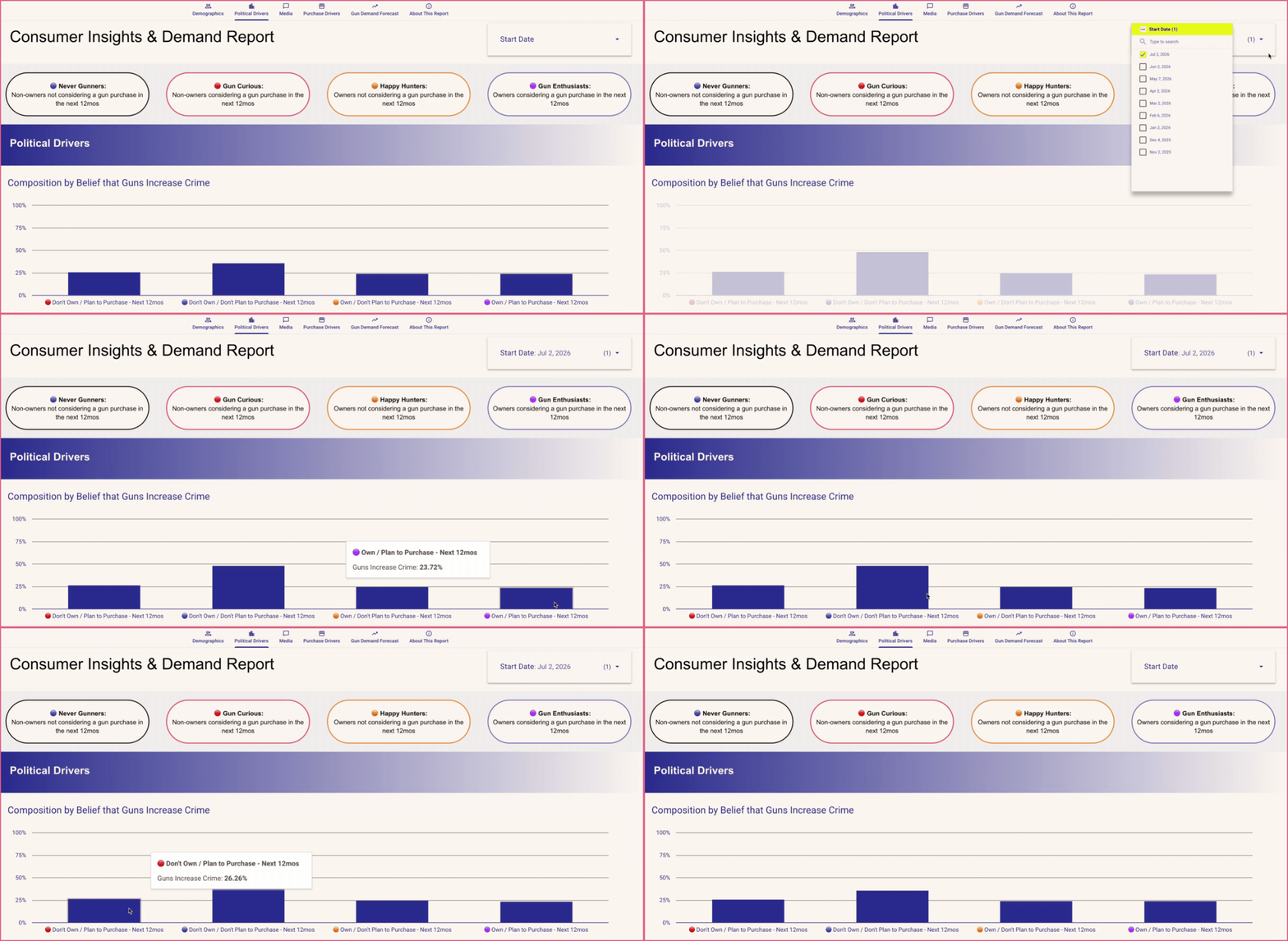
We update the interactive dashboard monthly, providing insights that we observe on a quarterly basis, and update our demand forecast twice a year. See previous editions here for past data and observations:
This quarter, the Guns Down America team noted the following findings:
Insight #1:
Changes in audience sizes represented a slight uptick in consumers planning a gun purchase in the next 12mos:
The demand forecast helps provide greater context to this uptick in demand. An observable rise in short-term demand coincided with Assault Weapons Bans or stricter firearm permitting laws in three states: Rhode Island, Virginia, and Colorado. Historically, gun violence prevention policies have led to temporary surges in demand. While the model predicts higher demand due to these inorganic demand factors, we don’t believe it will be sustained.
Insight #2:
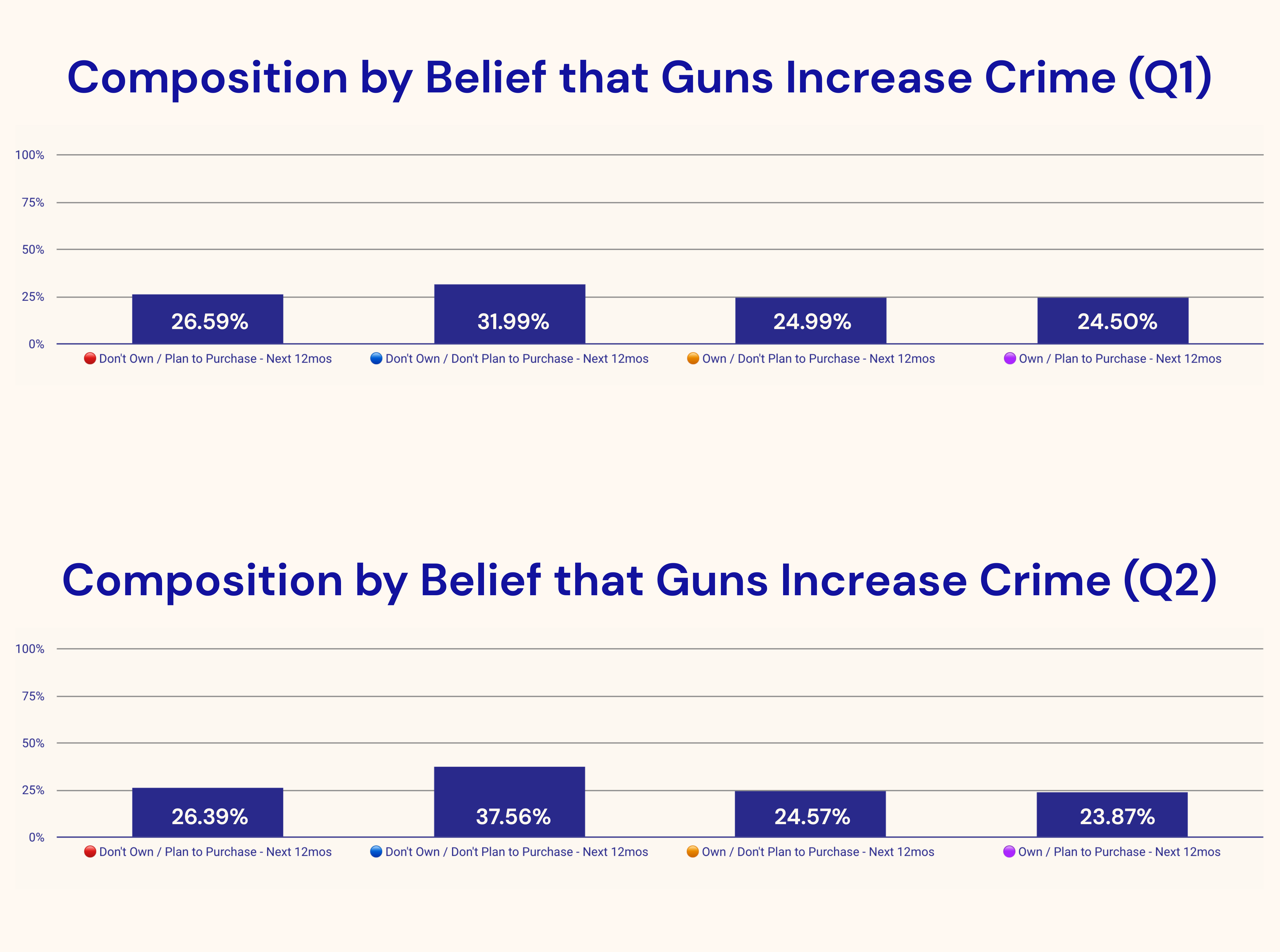
Public opinion on guns and safety are shifting. The percentage of Never Gunners who believe that guns increase crime grew by over 5%, from 31.99% last quarter to 37.57% this quarter. And they’re not the only ones who feel that way. Despite their ownership status, nearly a quarter of Gun Enthusiasts (23.87%) this quarter believe that guns increase crime.
Insight #3:
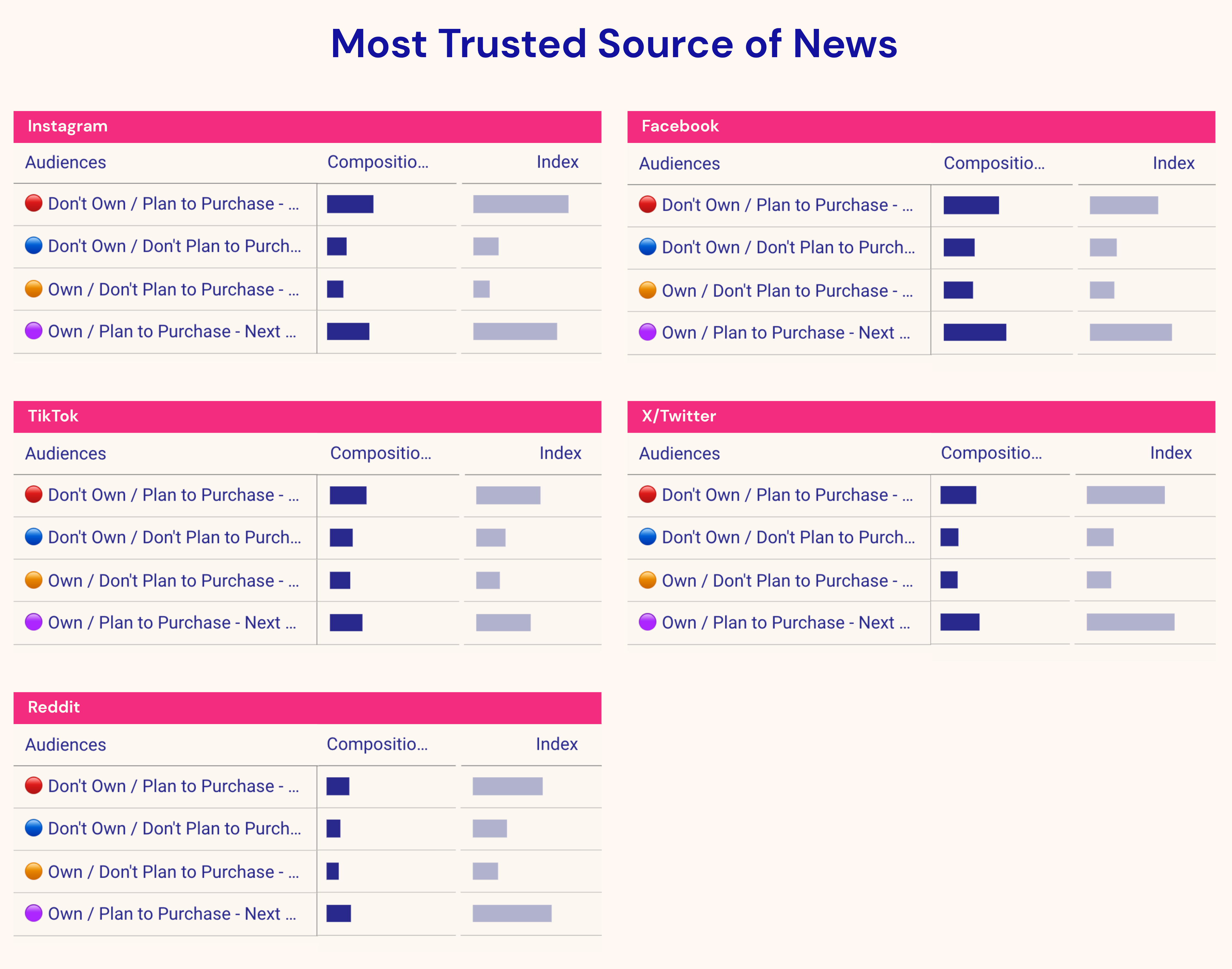
Both audiences planning a gun purchase in the next 12mos over indexed on Facebook, Instagram, TikTok, X/Twitter, and Reddit as their “most trusted source of news.”
Insight #4:
In matters of policy, audiences continue to align based more on their future purchasing status, rather than their gun ownership status. Key gun violence prevention policies continue to have significant support across all audiences. Support for mental health funding and universal background checks is popular across the board, with over 70% of each audience either “strongly” or “somewhat” supporting these measures.
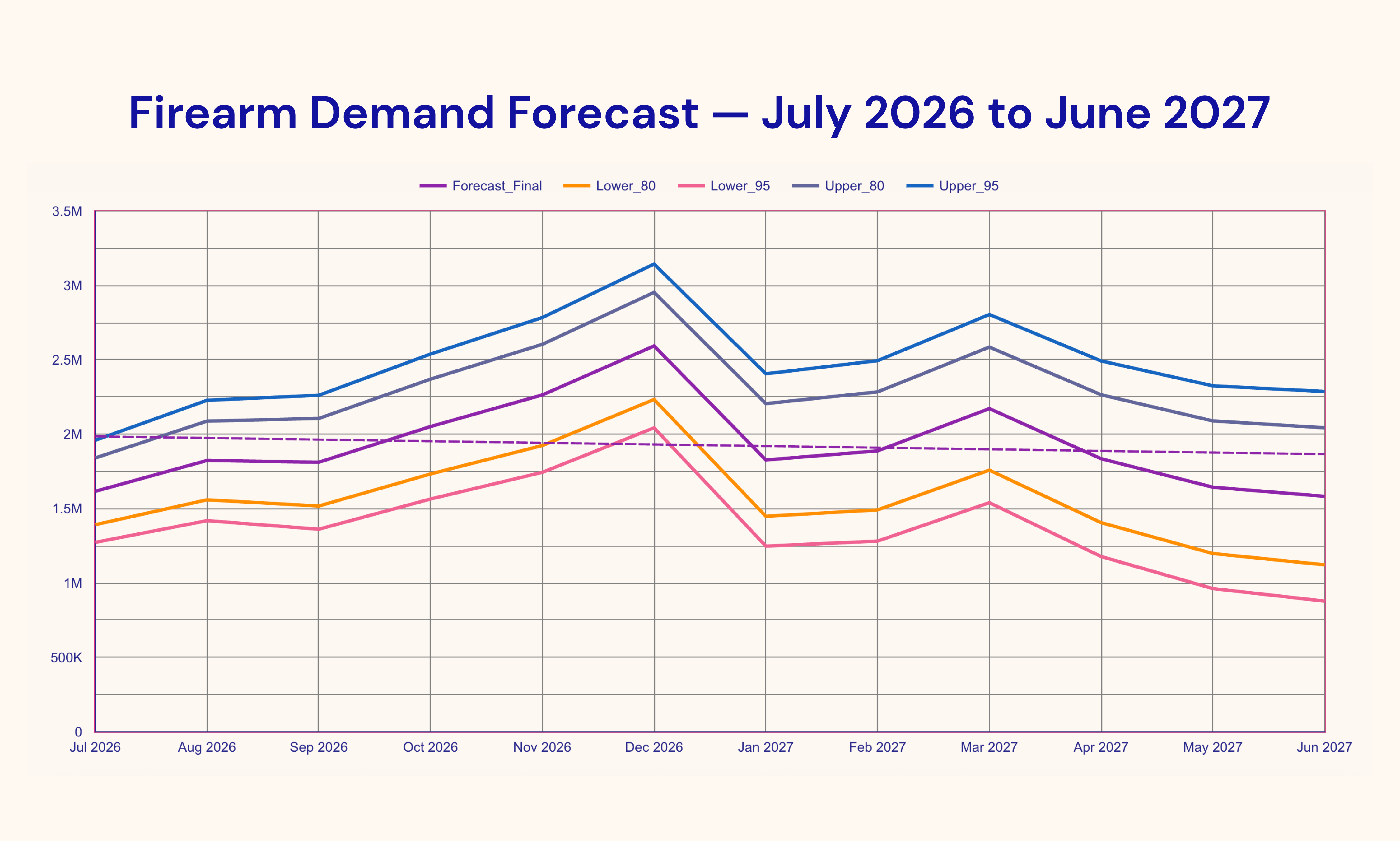
The demand forecast produced by the Guns Down America Small Arms Data Observatory shows an upward trend in 2026 after five straight years of cooling, supported by similar trends in consumer polling data. The model forecasts a higher overall estimated demand over the next 12 months due in part to a demand upswing in three states that had significant policy shifts: Rhode Island’s assault weapons ban (took effect 7/1/2026), Virginia’s assault weapons ban (took effect 7/1/2026, currently under injunction), and Colorado’s updated permitting requirements for semiautomatic weapons (set to take effect 8/1/2026).
As mentioned, we do not anticipate this shift in demand will last and would not view it as a demand signal that will continue in the long term. It’s a long-observed pattern that major policy changes or current events (like mass shootings or presidential elections) temporarily accelerate demand for guns, but the industry itself lacks organic growth.
Case in point, in the ten states that make up almost half of the gun market, we see evidence of this continually stagnant growth. The states — Texas, Florida, California, Virginia, Pennsylvania, Ohio, Tennessee, North Carolina, Missouri, and Illinois — made up 49.25% of firearms sold nationally, but show an average of just a 0.6% increase in demand when excluding Virginia as an outlier due to recent policy changes.
The next six months will show the civilian firearms market return to softening demand. Our model forecasts that demand will begin to drop in the second half of 2026.
A note on methodology:
Raw NICS checks were Brauer-adjusted: permit and administrative checks are excluded, and handgun, long gun, and multiple-sale checks were weighted to estimate units sold. Each series was then decomposed via STL (seasonal-trend decomposition using Loess), and the seasonal component was subtracted to yield a seasonally adjusted series. An ARIMA model was fit to the adjusted series and projected 12 months ahead, with seasonality restored for the final monthly forecasts. The analysis was conducted using Claude Fable 5 and validated against a 12-month out-of-sample holdout (annual totals within ±1% of actuals).


